

—— Knowledge Base ——
Project Retrospective Methodology
Overview of TCGen methodology utilized for Project Retrospectives and Process Reviews. This is conducted as a series of workshops that help a team constructively build a prioritized consensus around a few high-value improvements to pursue.
Introduction
Project retrospectives provide an important source of input to understanding what has gone wrong and what forces led to those problems.
The pillars of our approach are to:
- Establish a timeline that provides a basis for shared interpretation and causality of events
- Get participation across a spectrum of teams that allows us to document the problems while also providing some inoculation for a sense of blame that can hamper progress
- Diagnose and document root causes across multiple perspectives
Collectively these ensure shared understanding among cross-functional teams, and (crucially) between teams and leadership that we’ve seen be very effective in changing organizational behavior and improving outcomes.
Methodology Overview
The methodology centers around a root cause analysis of three critical events in the project timeline. Root causes from one project are then compared with those found in other projects, and with themes identified through interviews and analysis of metrics.
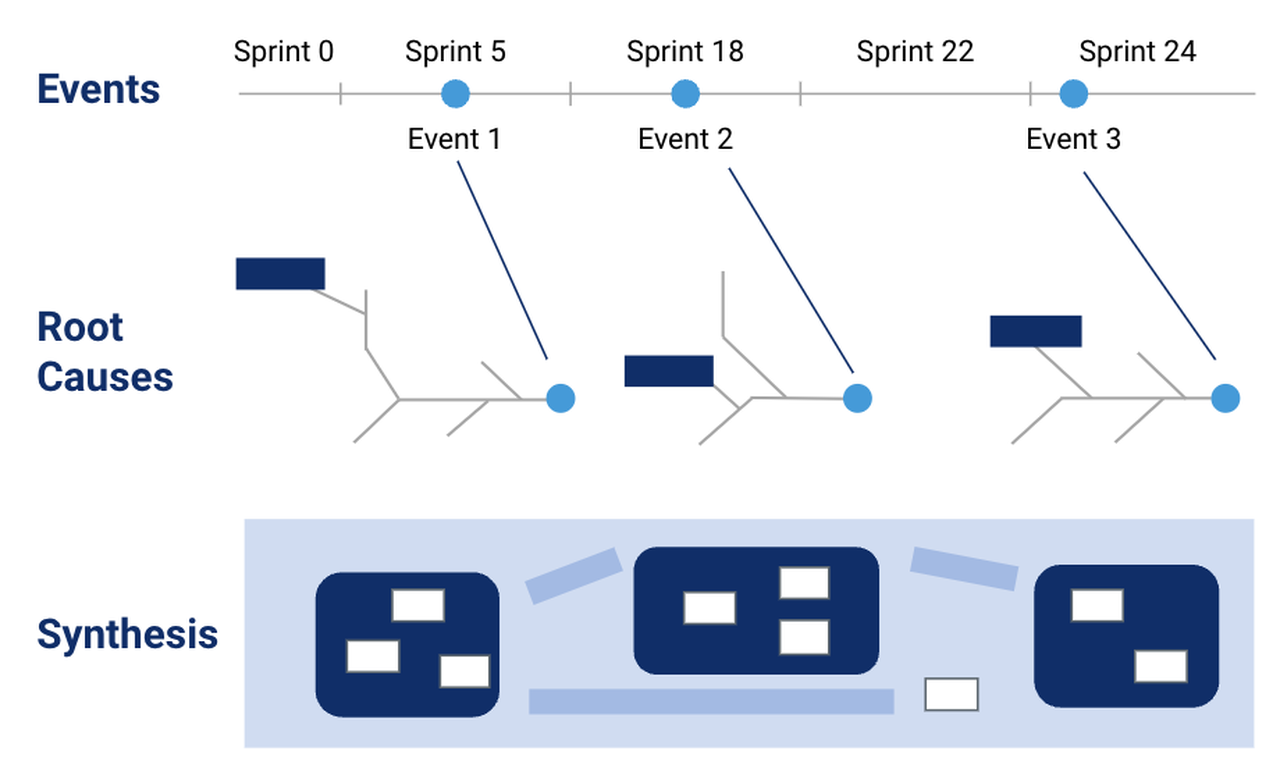
The diagram below illustrates how three “key events” in the project retrospective are utilized to explore root causes, using a fishbone analysis, which in turn are synthesized to find patterns across projects.
Key Steps In Process
Pre-work. Create a shared 1-slide visual Project Timeline of major events that forms the foundation for discussion. Determine attendees and schedule for workshops.
Prep checklist
- Introductory meeting with PM and PMO
- Determine list of attendees and schedule meeting
- Copy Timeline Template and configure for project — start date and dot votes
- Get starting timeline from PM and populate events in timeline
Session 1 agenda: share goals and process with team. Review Timeline to jog team’s memory and ask them to add any omitted events. Ensure Timeline captures most important events.
Async: each team member places three votes on the events that they believe were most impactful of GTM. We tally and sort the most important to the top.
Session 2 agenda: confirm or revise the voted priorities for top 3 events. Familiarize team with fishbone analysis process to identify multiple root causes. Explore 3-levels of causation for first event (and second, time permitting) and document causes. Vote on the root causes to surface the most important.
Session 3 agenda: Confirm or refine the prioritization of events. Conduct fishbone analysis and finalize documented root causes. Review and recap with team.
Constructing a Timeline
We start by constructing a one-page timeline to form the basis of discussion. It’s important for the team to see everything on a single page in order to jog their memory on what happened and in what order. This may be done graphically by drawing on a timeline, but we leverage a Sheet that makes it easy to take notes. Here is a starting template.
Instructions for Asynchronous Dot-Voting
Dot voting provides a simple mechanism to solicit input from a cross-functional team and surface their collective perception of the most consequential events or root causes in a project. It uses a metaphor of having each team member place stickers (”dots”) on post-it notes on a shared whiteboard, and allowing everyone to step back and see which notes received the most votes.
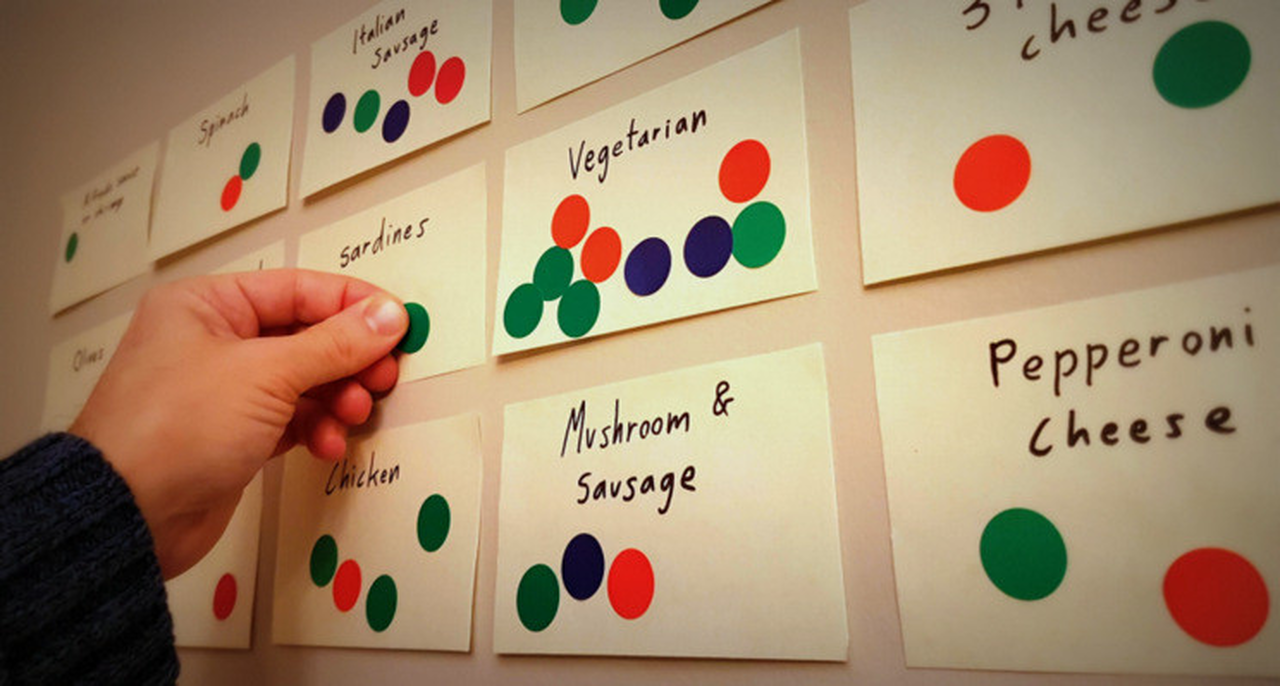
In order to conduct dot-voting asynchronously, TCGen will share a list of events, each with a number. Some may be highlighted as suggestions, but you may vote for anything on the list, or add a new item.
- To vote, review the list and consider which 4 events you believe had the greatest impact and are most important to discuss in an RCA. Only one vote per item.
- Write privately to TCGen with the numbers of the 4 items on which you wish to vote. We don’t want your vote to influence that of others.
- Write-ins are welcome! If you believe an event not shown is more important than one listed, simply write a brief description and approximate mm/yy when it happened in your email.
Root Cause Analysis
The Root Cause Analysis (RCA) method involves a thorough examination of the top three critical events identified in the project timeline. By employing the fishbone analysis process, we can systematically explore and document multiple root causes for each event. This involves exploring causes across multiple categories.
Categories of Exploration in RCAs
During the root cause sessions, we explore with the team several categories of causes.
- Management / project team communication
- Function / function communication
- Requirements (internal)
- Environment or market (external)
- Process
- Technology
Root causes identified in each project will later be compared with those in other projects to synthesize common themes.
Inspiration of Process
Our methodology builds upon the Multi-fact Pickup Method pioneered by Jiro Kawakita. More reference material is available here:
References
Manual for the Language Analysis Multi-fact Pickup Method

Video walkthrough and description of methodology