


—— Knowledge Base ——
GTM Audit Checklist
The GTM Audit Checklist is a great way to assess the inflight progress of a GTM team and also as the starting point for new programs that are adopting the GTM Framework. The scoring is done by the core team itself, including Product Marketing and the GTM leads. A client example for the finished self-assessment checklist, from product development, is shown below.
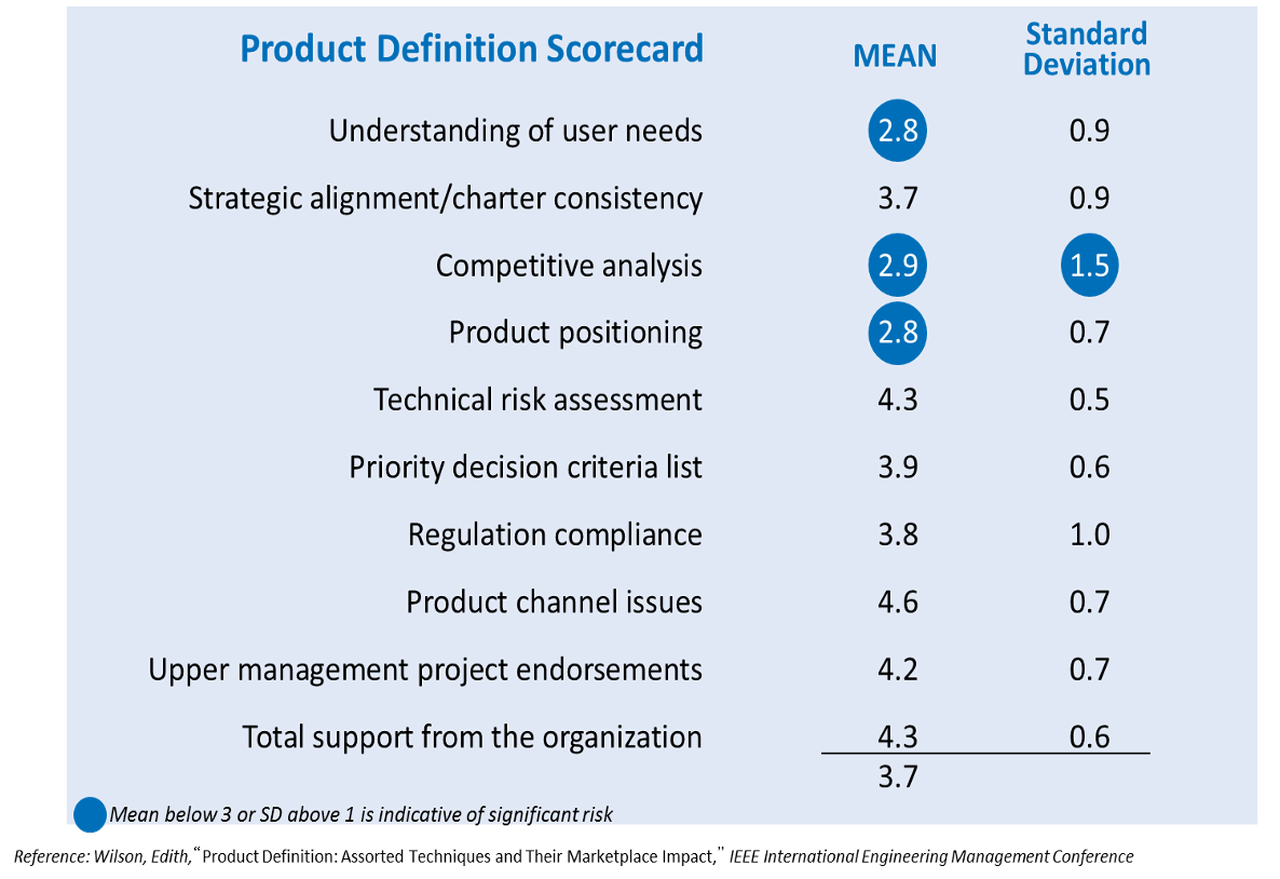
This GTM Audit Checklist provides a quick and accurate assessment of GTM activities’ completeness. It focuses on less than 10 critical GTM tasks/deliverables, offering a concise evaluation of the team’s readiness.
Scoring Areas
This summary illustrates the areas that should be assessed to determine the level of preparedness a team has for GTM. They may be used in conjunction with the scorecard below to gain a quick, easy, and relatively complete summary of the team’s assessment of their readiness.
The Phases are based upon typical phases of a Best Practice GTM Framework.
| Phase | Task |
|---|---|
| Product Development and Planning | Product Concept Documentation: Ensure that the product’s concept features and unique selling propositions (USPs) are well-documented. |
| Product Development and Planning | Feasibility Studies: Ensure technical, financial, and operational feasibility studies have been completed. |
| GTM Accountability | Accountable GTM Lead: GTM Lead identified & assigned who has capacity to drive successful GTM and coordinates marketing and sales communication. |
| Market Research and Validation | Voice of Customer (VoC) Feedback: Check that customer feedback has been gathered and analyzed to validate product-market fit. |
| Market Research and Validation | Pricing Strategy: Ensure a pricing strategy is signed off by sales management, and is developed and aligns with the market positioning. |
| Marketing Strategy and Pre-launch Activities | Go-To-Market Strategy Document: Review the comprehensive GTM strategy document including objectives, tactics and KPIs. |
| Marketing Strategy and Pre-launch Activities | Channel Strategy: Confirm the selection of marketing and sales channels with a clear rationale for each. |
| Marketing Strategy and Pre-launch Activities | Sales Enablement Materials: Ensure that sales teams have the necessary tools including pitch decks, product demos, and FAQs. |
| Product Launch | Launch Plan: Review the detailed launch plan including logistics, communication plans and influencer access. |
| Post-Launch Analysis and Optimization | Performance Metrics Review: Check that KPIs and other performance metrics are reviewed regularly to assess the success of the launch. |
Self Assessment or Audit Preparation
The exercise is performed at an audit (by individual or small team) or a core team meeting session of about an hour (as part of, or added on to existing team meetings), led typically by the product manager who first executes the guide, tally’s the score — each ranks the deliverable quality from 1 (poor / doe not exist) - 3 (average job / sufficient), to 5 (excellent / confident in results).
The focus is on the top tasks/deliverables from the GTM framework are know to be critical - where there is risk. This list and the scorecard should evolve over time. Ideally this scorecard should be completed by the Product Definition (Phase I), no later than the beginning of Planning (Phase II).
Scoring
Example of scoring for a Product Definition Scorecard that shows scores indicating risk (by dark circles) from a client self assessment of their definition process:
After the product manager goes over the instructions, and passes out a scoring checklist to record your personal vote. The team members write down a number 1, 2, 3, 4, 5 depending on their send of quality for each task or deliverable. There is no discussion during the scoring unless there is a question for clarification - “Was that this presentation or was it captured in the meeting notes”? “Did you visit this segment in your product discovery”? “Are we sure the price was the one agreed to by sales as represented in the D3 meeting”?
Results
After silent voting the facilitator (product manager) tallies the votes, creating an average and a standard deviation for each question. The the group discusses gaps for issues like: The average is below 3.0, or The standard deviation is greater than 1 (or vote widely split). The final score readings are recorded and any deliverables that are late or incomplete are tasked for actions.
If meaningful misalignments are discovered among team members (e.g. high standard deviations), those should be discussed to normalize understanding. If agreement cannot be reached, they should be handled via a constructive escalation process.
This scorecard may be used to complete the process above.
GTM Self-Assessment & Audit Scorecard
Project Name:
Your Name:
Date:
| Number | Circle - Quality/Risk | Task |
|---|---|---|
| 1 | 1 2 3 4 5 | Product Concept Documentation: Ensure that the product’s concept features and unique selling propositions (USPs) are well understood. |
| 2 | 1 2 3 4 5 | Feasibility Studies: Ensure technical, financial, and and operational feasibility studies have been completed. |
| 3 | 1 2 3 4 5 | Accountable GTM Lead: GTM Lead identified & assigned who has capacity to drive successful GTM and coordinates marketing and sales communication. |
| 4 | 1 2 3 4 5 | Voice of Customer (VoC) Feedback: Check that customer feedback has been gathered and analyzed to validate product-market fit. |
| 5 | 1 2 3 4 5 | Pricing Strategy: Ensure a pricing strategy is signed off by sales management, and is developed and aligns with the market positioning. |
| 6 | 1 2 3 4 5 | Go-To-Market Strategy Document: Review the GTM strategy document including objectives, tactics and KPIs. |
| 7 | 1 2 3 4 5 | Channel Strategy: Confirm the selection of marketing and sales channels with a clear rationale for each. |
| 8 | 1 2 3 4 5 | Sales Enablement Materials: Ensure that sales teams have the necessary tools including pitch decks, product demos, and FAQs. |
| 9 | 1 2 3 4 5 | Launch Plan: Review the detailed launch plan including logistics, training, communication plans and influencer access. |
| 10 | 1 2 3 4 5 | Performance Metrics Review: Check that KPIs and other performance metrics are reviewed regularly to assess the success of the launch. |
Scoring Rubric
1 - Poor Quality. Incomplete, partial, or very low quality deliverable. Or can be a new product, new technology where the needs and risks are high. High risk of failure.
3 - Fair Quality. Complete and average deliverables, just meets the task requirements. Medium risk of failure.
5 - High Quality. Thorough job, finished work, excellent & clear thinking (e.g. worth keeping as a reference). It has survived any pressure tests. Low chance for channel conflict or dealer resistance (mitigated if present), edge cases, and proven technology. Low risk of failure.